




Commercial buildings need to be designed with fire safety in mind. Whether you’re designing or managing an office, shopping mall, hospital, hotel, warehouse or industrial building, having a well thought out fire protection system will help to protect people, property and essential infrastructure.
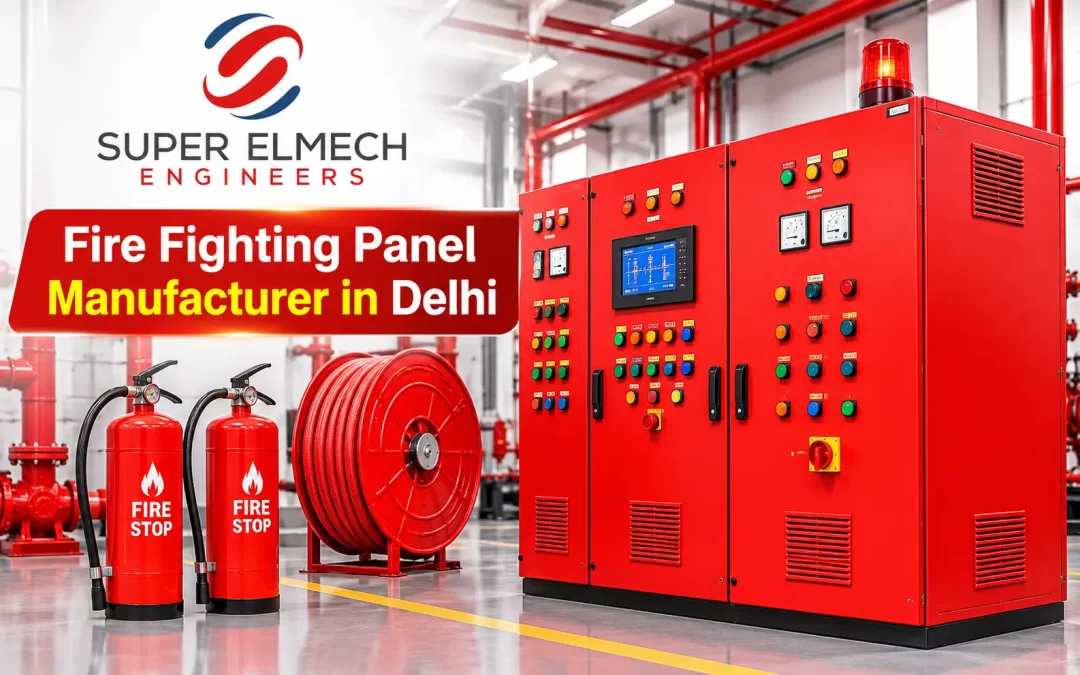
As part of this system, a fire fighting panel will provide you with an electrical solution to control your fire fighting equipment such as main fire pump, standby pump and jockey pump. A well-designed panel will ensure that the pump system will behave in line with your fire protection scheme.
Choosing the right fire fighting panel manufacturer in Delhi for your build is essential for any builders, MEP consultants, electricians and procurement team. Ensuring that the panel will work with the pump motors, supply and control sequence of the building.
This article will outline the fire fighting panel norms for commercial buildings in Delhi, including key components, pump systems, standards, documentation and what to look out for when buying.
Table of Contents
What Is a Fire Fighting Panel?
Why Commercial Buildings Need Fire Fighting Panels
Fire Fighting Panel Norms for Commercial Buildings in Delhi
Important Standards and Regulations
Main Components of a Fire Fighting Panel
Main Fire Pump, Standby Pump and Jockey Pump
Technical Features to Check Before Buying
Requirements for Different Commercial Buildings
Documents Required Before Panel Manufacturing
How to Choose a Fire Fighting Panel Manufacturer in Delhi
Testing, Installation and Maintenance
Common Buying Mistakes
Frequently Asked Questions
A fire fighting panel is an electrical panel that will allow control over pumps and other equipment in the fire fighting water system of a building.
This can include:
Main Electric Fire Pump
Standby Fire Pump
Jockey Pump
Fire Water Tank
Hydrant System
Automatic Sprinkler System
Pressure Switches/Sensors
Alarms/Monitoring
The panel will receive control signals to trigger the required pumps.
How a Fire Fighting Panel Works
A typical fire pump control system will work as follows:
Fire water piping will be under pressure within the required specification.
A pressure drop will be detected by the approved pressure sensors.
The required pump will start as per the control sequence.
Other pumps will also start as per the approved fire protection scheme.
The panel will also provide indication of pump and fault status.
Facility personnel will monitor the system and investigate any faults.
The start pressure, control sequence, alarm conditions and stop sequence will need to be finalised by the fire protection designer. These cannot be copied from another building unless they are approved.
Why do Commercial Buildings Require them?
Commercial buildings can often have electrical, air conditioning, lifts, machinery, storage and many other fire hazards. The fire protection system should be designed to cater for the occupancy of the building.
Having the right fire fighting panel will allow control of your fire pump.
Reliable Pump Operation
The panel provides the electrical control system for your fire pumps. Choosing the correct components, wiring and control will ensure reliable operation during an emergency.
Hydrant & Sprinkler System Compatibility
If you have hydrants and/or sprinklers installed, there may be specific requirements for water flow/pressure. The pump system and panel should be compatible with the approved hydraulic calculations and fire protection drawings.
Pump Indications
The panel can provide indication of:
Power available
Pump running
Auto/Manual
Fault
Phase Failure
Common Alarm
Remote signal (if required)
The indication will depend on the project specification.
Building Fire Safety
The fire fighting panel is just one element of the fire safety system within the building. Other elements include exits, fire detection, alarm, smoke control, hydrants, sprinklers, water storage, emergency power etc.
The fire fighting panel alone will not guarantee that your building will be approved for fire safety and receive a Fire Safety Certificate.
Fire Fighting Panel Norms for Commercial Buildings in Delhi
The fire safety requirements will depend on the occupants, size, height and approved plans of the building.
The Delhi Fire Service administer the Delhi Fire Service Act (2007 ) and Delhi Fire Service Rules (2010 ), including any notified amendments. It is recommended that building owners and project consultants confirm current requirements.
Delhi Fire Service Requirements
The Delhi Fire Service will provide guidance on fire safety measures required for buildings covered within the requirements. This will include:
Access for fire engine
Protected Exits
Fire Extinguishers/Hose Reel
Automatic Detection & Alarm
Internal & External Hydrants
Automatic Sprinklers
Fire Pumps/Pump System
Captive Fire Water Storage
Emergency Power Supply
Smoke Control
Fire Control Rooms
Special Fire Protection
The requirements will depend on the building type and approved fire safety scheme.
Buildings that may Require Fire Safety Approval
The Delhi Fire Service FAQs state that the following building types will fall under Rule 27 of the Delhi Fire Service Rules (2010 ):
Business buildings over a certain height/storey
Mercantile
Assembly
Industrial
Storage
Hazardous
For example, they state that business buildings over 15m or ground + 4 storeys and mercantile buildings over 9m or ground + 2 storeys.
Check current requirements to confirm the height/storey requirements.
Fire Safety NOC & Fire Safety Certificate
If the building falls within the requirements, you may need to get fire safety approval in two stages:
Prior to construction – Review of plans and issuing of recommendations.
Prior to occupation – Verification of fire/life safety measures installed. You may receive a Fire Safety Certificate.
You should liaise with your architect, fire consultant and relevant building authority to understand how the approval will happen.
A Fire Safety Certificate refers to the overall compliance of the building, not just because a fire fighting panel was installed.
Fire Pump Requirements
The capacity of the fire pump should be determined from the discharge and hydraulic calculations.
The Delhi Fire Service FAQ state that the pump capacity should be determined from the actual discharge requirements according to IS 15105 and NBC Part 4. Use the higher value.
The panel manufacturer will require the approved pump schedule, motor ratings and electrical details for the project.
Important Note – 2026 Delhi Rule Amendments
Further amendments were notified for the Delhi Fire Service Rules in 2026. See the notification for details. This states that they will come into effect once the amended Unified Building Bye-Laws have been notified. However, there is a transition period for any applications already in progress.
Therefore, when considering your project, you should not automatically assume that all new requirements will apply to all buildings. Liaise with the Delhi Fire Service or relevant building authority to confirm what will actually apply.
Key Standards & Regulations
The following references may apply to your project. This will depend on the project and latest edition.
National Building Code – Part 4
This provides guidance on fire and life safety. This includes fire protection, escape routes, detection/alarm, hydrants, sprinklers, smoke control and fire fighting.
IS 15105 – Automatic Sprinklers
This refers to installation of automatic sprinklers. The Delhi Fire Service FAQ refer to this standard.
Sprinklers should have hydraulic calculations and layout completed by the fire protection designer.
IS 15301 – Installation & Maintenance of Firefighting Pumps
This is the Indian Standard for installation & maintenance of firefighting pumps.
Project Specific Requirements
The panel may also have requirements from the tender, consultant and approved drawings. It may also need to meet the electrical design criteria and equipment manufacturers requirements.
Always confirm the latest edition and amendments with your project consultant and relevant authority.
Key Components of a Fire Fighting Panel
The panel will be designed depending on the number of pumps, motor ratings, supply and approved control.
Incoming Supply
The supply will provide power to the panel. This should be rated to the approved electrical design.
Motor Switching
The switching should be chosen to suit the motor ratings and duty. The motor start-up should be coordinated with the pump and electrical design.
Protection
Protection should be chosen to suit the fire pump requirements and project. This should be coordinated to ensure that pumps are not accidentally prevented from operating.
Contactors & Control Relays
These will provide switching and control within the panel. These should be rated and wired to the approved drawings.
Pressure Switches & Sensors
These will help to start the pump sequence. These should be set by the fire protection designer.
Indications
This can provide indication of power available, pump running, operation mode and fault. Remote signals can also be added.
Enclosure, Cable Entries, Terminals & Wiring
The enclosure, cable entries, terminals and wiring should be suitable for the installation. The IP rating should be confirmed from the technical specification.
Main Fire Pump, Standby Pump & Jockey Pump
There may be multiple pumps within the fire pump system.
Type
Function
Main Fire Pump
Provides required firefighting water flow.
Standby Fire Pump
Provides backup pump capacity as per design.
Jockey Pump
Maintains pressure within the piping. Will compensate for slight pressure drop.
Main Fire Pump
The main fire pump will provide water to the hydrants/sprinklers. This will be when the system requires the designed firefighting flow.
The capacity and operation will depend on the hydraulic calculations and approved fire protection scheme.
Standby Fire Pump
The standby pump will provide backup pump capacity. This should be coordinated with the overall design.
Jockey Pump
The jockey pump will maintain pressure within the fire water piping. This will compensate for slight pressure drop. This will not replace the main fire pump during a large fire requirement.
Checklist of Key Technical Features
When looking for a fire fighting panel manufacturer in Delhi, you should look at the technical design of the panel.
Automatic & Manual Operation
Ensure that the panel can provide the required operation mode. The control sequence should be documented and tested.
Suitable Motor Start-up
The start-up will depend on the motor rating, supply, project and fire pump requirements.
Protection
Review the protection that will be provided. This should be suitable for the intended fire pump duty. The fault level, motor characteristics and cable requirements should be considered.
Alarms & Indications
Ensure that the required indications/alarm will be provided. This can include pump running, power failure, phase fault and common fault.
Remote Monitoring
Some commercial buildings will require pump status signals to be sent to the fire alarm panel/building management system. Ensure that the required signals, interface and terminals are known.
Enclosure
The enclosure should be suitable for the pump room.
Requirements for Different Types of Commercial Buildings
Offices
Fire pump control may be required for hydrants/sprinklers. The panel should be designed to the approved fire protection scheme and building electrical requirements.
Shopping Malls/Retail Complexes
Shopping malls can have multiple storeys, basement, food courts, storage and service areas. The pump and control should be coordinated with the overall fire protection design.
Hospitals
Hospitals have critical areas of occupation and essential services. The fire pump control should be coordinated with emergency power, fire safety and facility management requirements.
Hotels
Hotels have guests who may not be familiar with the building. The fire protection system should be designed and maintained as part of the overall life safety strategy.
Warehouses/Industrial
Storage and industrial buildings may have specific fire loading and risks. The pump capacity, sprinklers, hydrants and control should be based on the approved risk assessment and project design.
Documentation Required
Having full technical information will help prevent design changes and delays to manufacture.
Before ordering a fire fighting panel, you should provide:
Approved fire protection scheme
Fire pump schedule & data sheets
Pump motor nameplate ratings
Electrical Single Line Diagram
Panel General Arrangement
Control schematic & sequence
Required indications & alarms
Remote monitoring
Bill of Materials & component specifications
Inspection & testing requirements
Cable & termination details
Operation & maintenance documentation requirements
Why Approved Drawings are Important
The approved drawings will show what electrical and control requirements are required. This should include incomers, pump ratings, control, indications, terminals, cable entries and interfaces.
Any design changes should be reviewed by the responsible consultant/project authority.
How to Choose a Fire Fighting Panel Manufacturer in Delhi
Choosing a fire fighting panel manufacturer is an important decision for your project.
Things to consider:
Engineering Capabilities
Can they produce General Arrangement, Single Line Diagrams and control schematics?
Experience
Ask if they have experience with fire fighting panels, pump control and other electrical panels. Request any relevant project references.
Component Selection
Review what make/model/ratings they plan to use. They should be suitable for the motor data and approved technical specifications.
Manufacturing
Understand how they will manufacture the panel. This should include fabrication, surface treatment, assembly, wiring and inspection.
Inspection & Testing
Ask what inspections/testing they carry out prior to dispatch. Ensure that the reports/documents provided meet the requirements of the tender/project.
Coordination
They should be able to coordinate with the pump supplier, electrician, MEP consultant and fire protection designer.
After Sales Support
Check if they can provide technical support, commissioning coordination and maintenance documentation.
Why Choose Super Elmech Engineers?
Super Elmech Engineers offer electrical panel engineering and manufacturing solutions for commercial and industrial.
They have a dedicated Fire Fighting Panels page showing the panels available for fire protection. These can include main pump, standby pump and jockey pump control. With automatic and manual operation.
From their website you can see that they can provide electrical panel engineering, fabrication, assembly, testing and support.
When enquiring about your project, you should provide them with the approved fire protection scheme, pump motor ratings, electrical supply and required control sequence. This will allow them to review the technical requirements.
View:
Fire Fighting Panels
Testing & Support
About Super Elmech Engineers
Contact Super Elmech
Testing, Installation & Maintenance
Pre-Installation
Ensure that the approved drawings, panel size, cable entries, earthing and installation location are correct. Confirm that the electrical supply and pump motor details are as per the approved design.
Inspection & Testing
Qualified personnel should test the panel. They should follow the approved inspection/testing plan. This may include:
Visual Check
Wiring & Termination Check
Insulation Resistance
Continuity Test
Control Circuit Test
Manual/Automatic Check
Indications & Alarms
Pump Start Sequence
Remote Interface Signals
Document the results and coordinate with the project consultant.
Regular Maintenance
The building management team should maintain the overall fire protection system as per the requirements. They should follow the manufacturer recommendations.
The maintenance should include pump operation, panel condition, electrical connections, indications and associated firefighting equipment.
Common Errors to Avoid
Avoid the following errors:
Choosing based on cost.
Not considering pump motor ratings/start up.
Not reviewing the approved fire protection scheme.
Choosing incorrect control sequence.
Not considering remote signals.
Not considering the fault level.
Not inspecting/testing.
Not coordinating with pump supplier.
Assuming that having a panel will guarantee fire safety approval.
A suitable panel should be selected based on technical review and coordination with the overall fire protection system.
Frequently Asked Questions
What is a fire fighting panel?
A fire fighting panel is an electrical control panel used to operate and monitor fire pumps and associated equipment in a building’s fire protection system.
What are the fire fighting panel norms for commercial buildings in Delhi?
Requirements depend on occupancy, building height, floor area, applicable Delhi Fire Service rules, building bye-laws and the approved fire protection scheme.
Is a fire fighting panel required in every commercial building?
The requirement depends on the building category and its approved fire safety design. The responsible consultant and relevant authority should confirm the applicable provisions.
What is the difference between a main fire pump and a jockey pump?
The main fire pump supplies the required firefighting water flow. The jockey pump maintains pipeline pressure and compensates for minor pressure drops.
Which standards are relevant to fire pump installations?
IS 15301 covers installation and maintenance of firefighting pumps. IS 15105 is relevant to automatic sprinkler system design and installation. NBC Part 4 is an important fire and life safety reference. Verify the applicable editions and project requirements.
Does installing a fire fighting panel guarantee a Fire Safety Certificate?
No. A Fire Safety Certificate relates to the building’s overall compliance with applicable fire and life safety requirements. A panel is only one part of the system.
What information is needed for a fire fighting panel quotation?
Provide the pump motor ratings, electrical supply details, approved pump arrangement, control sequence, drawings, required indications, remote monitoring requirements and project specifications.
Can a normal MCC panel be used for fire pump control?
A conventional MCC panel should not automatically be considered suitable for fire pump duty. The control panel must meet the applicable fire pump requirements and approved control philosophy.
How do I select a fire fighting panel manufacturer in Delhi?
Evaluate the manufacturer’s engineering capability, relevant experience, component selection, manufacturing quality, testing process, documentation and technical support.
Why is the pump operating sequence important?
The operating sequence defines how the main, standby and jockey pumps respond to pressure changes and system conditions. It should be documented and approved by the responsible fire protection designer.
Conclusion
Fire fighting panels are an important part of the electrical control arrangement used in commercial building fire protection systems. Their design must be coordinated with the fire pumps, hydrant and sprinkler networks, electrical supply and approved control philosophy.
For commercial projects in Delhi, buyers should verify applicable Delhi Fire Service requirements, building bye-laws, relevant Indian Standards and project-specific fire safety recommendations before ordering equipment.
Before choosing a fire fighting panel manufacturer in Delhi, review the pump ratings, motor starting arrangement, control sequence, electrical protection, monitoring requirements, drawings and testing documentation.
Super Elmech Engineers offers fire fighting panel solutions for project requirements. Contact the technical team with your approved drawings and pump details to discuss the appropriate panel configuration.
Discuss your project requirements: Super Elmech Fire Fighting Panels | Contact Us