




Table of Contents
- Introduction
- Understanding Industrial Electrical Panels
- Why Choosing the Right Manufacturer Matters
- Types of Electrical Panels Used in Industries
- Essential Technical Specifications
- How to Select an Electrical Panel Manufacturer
- Manufacturing and Quality Testing
- Electrical Panel Requirements Across Eastern India
- Industries That Need Electrical Panels
- Common Purchasing Mistakes
- Installation and Maintenance
- Frequently Asked Questions
- Conclusion
Introduction
Electrical panels are used in industrial environments to distribute power, control motors and protect electrical systems. They are used in manufacturing plants, engineering units, warehousing, infrastructure and utilities.
When looking for an electrical panel manufacturer in Jamshedpur and Eastern India it is important to choose the correct one. They will need to ensure that the panel meets all your electrical loads, conditions, protection, control and maintenance requirements.
Jamshedpur is an important industrial centre in Jharkhand, but there are other areas in the wider area of Eastern India, such as Ranchi, Bokaro, Dhanbad, Kolkata, Durgapur, Asansol and Bhubaneswar that have industrial or infrastructure projects.
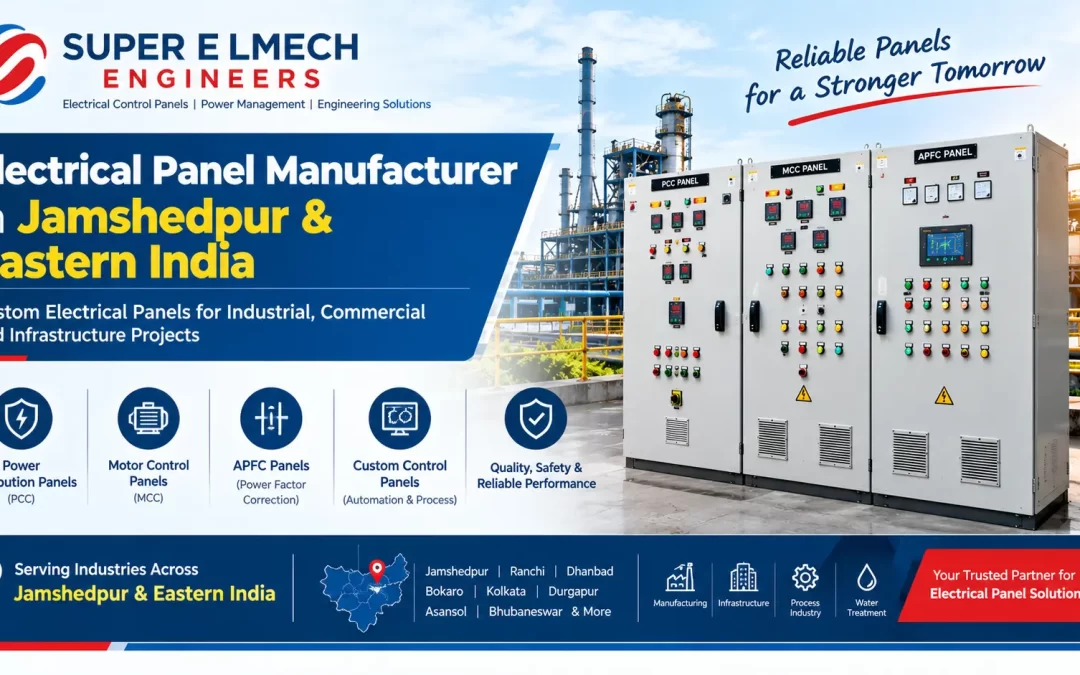
Depending on your application you may need a Power Control Centre (PCC) panel, Motor Control Centre (MCC), Automatic Power Factor Control (APFC) panel or bespoke electrical control panel.
Understanding the different options will help you create a detailed technical specification.
This article will look at the main types of panel, technical considerations, quality checks and questions that you should ask.
Understanding Industrial Electrical Panels
An industrial electrical panel consists of electrical equipment.
Depending on the equipment being used it will be designed differently. Some examples could be a power distribution panel or it could be to control motors.
Functions of an Electrical Panel
An industrial electrical panel can be designed to:
Distribute power to specific circuits.
Switch and isolate.
Protect circuits and equipment.
Control motors, pumps, fans and other equipment.
Indication of electrical parameters.
Manual or automatic control.
Enable any faults to be seen by maintenance.
The functions required should be noted so that the panel is manufactured to meet your approved design.
Importance of Choosing the Right Manufacturer
The quality of the panel is determined based on its design, component selection, manufacturing, testing and installation.
Reliable Power Distribution
A well-designed distribution panel can help ensure the power is distributed to the correct equipment and circuits. Having circuits labelled correctly, the correct protection and correct drawings can make maintenance easier.
Protection of Equipment
The protection should be selected based on the expected loads, faults and coordination. Choosing the correct protection will help manage the electrical risks required.
Improved Motor Control
Some motors within an industrial application may require different starting methods. Choosing the correct motor control panel will help organise the functionality and provide the required indication.
Easier Maintenance
Having everything labelled, easy access to components and up-to-date drawings can help with understanding the system and identifying faults.
Defined Specification
Having a detailed specification will help avoid any confusion when purchasing and will make it easier to plan for any future modifications.
Types of Industrial Electrical Panels
Depending on the application you may need a different type of panel. It will depend on what you want the panel to do and your electrical loads.
Power Control Centre Panel
A Power Control Centre (PCC) panel is generally used for distributing power.
Depending on the project it can include incomers and outgoers, busbars, metering and protection.
You will need to confirm the current rating, short circuit requirements, number of outgoing feeders, incomers and if there will be any future expansion.
Motor Control Centre Panel
A Motor Control Centre (MCC) panel is designed to control and protect multiple motors. It is commonly used for pumps, blowers, conveyors, fans and production equipment.
Depending on the design the motor starters can include:
Direct on line starters.
Star Delta starters.
Soft starters.
Variable Frequency Drives (VFD).
The correct starting method will depend on the motor ratings, starting current and mechanical requirements.
Automatic Power Factor Control Panel
An Automatic Power Factor Control (APFC) panel will manage the power factor by switching the capacitor banks based on the power factor and control settings.
When choosing an APFC panel you will need to consider the load profile, sized capacitor banks, switchgear, ventilation, protection and harmonic levels.
A qualified engineer should assess the system before deciding on the capacitor banks or harmonic mitigation equipment. The amount of savings and penalties avoided will depend on the utility tariff, load profile and correct system design.
Electrical Control Panel
An electrical control panel will control certain equipment with the use of controls, relays, timers, PLC’s or automation equipment.
The controls can be to start/stop equipment, interlock equipment, provide indication and automatic control.
While using PLC automation can be useful for complex applications it is not required for all.
Water Treatment Plant Control Panel
Water treatment may require some electrical control of pumps, motors, valves and level signals.
The panel design should be based on the approved process design, equipment list and control strategy. You should confirm what instrumentation, automation, testing and drawings are required.
Technical Specifications
Your technical requirements should be confirmed with the buyer and electrical consultant of the project.
Specification
Ensure:
Rated Voltage/Frequency.
Matches the site supply.
Rated Current.
Appropriate for the expected loads.
Short Circuit Rating.
Matches the calculated fault level.
Busbar.
Current rating, material and any design requirements.
Enclosure.
Should be suitable for indoor or outdoor use.
Protection.
Ensure correct ratings, settings and coordination.
Motor Starting Method.
Appropriate for all connected motors.
Metering.
Required metering.
Automation.
PLC, HMI and field signals.
Earthing and Bonding.
Match the approved design.
Drawings.
Drawings, labelling and component listing.
Testing.
Confirmed testing and inspection requirements.
Enclosure and Environmental Requirements
If the panel is going to be fitted into a clean electrical room then the enclosure may differ to one that is going to be in a dusty, wet, hot or corrosive environment.
Speak to the manufacturer about the installation. The enclosure, ventilation and ingress protection should be chosen based on the actual conditions and approved design.
Expansion
If there is potential for expansion in the project then speak to the manufacturer about spare feeders, space within the panel, busbar and expansion of the control system.
It is important to clearly note any future requirements.
Choosing an Electrical Panel Manufacturer
Ensure that the manufacturer has an understanding of the technical requirements and can explain how the panel will be designed, manufactured, tested and supported.
Engineering
Ask if they can produce or review the following drawings:
General arrangement.
Single line diagram.
Power and control diagrams.
Panel layout and component listing.
Terminations and cable connections.
The relevant drawings should be reviewed and approved by the correct authority in the project.
Components
Ask what make/models are going to be used and what their ratings and specifications are. Ensure that the quote is following the approved vendors list or preferred brands.
Testing
Ask what inspections and tests are going to be carried out. What tests are going to be carried out and what the requirements are.
Overall Quote
Ensure that the quote contains all the required items. Does it include the components, enclosure, manufacturing, testing, packaging, transport, installation support and commissioning?
Note what isn’t included.
After Sales
Ensure what the warranty, technical support and fault/replacement process is.
If your project is in Jamshedpur and other areas in Eastern India then ensure what the delivery timescales and site support is.
Manufacturing and Testing
A structured manufacturing process can help ensure that the panel meets the required specification.
Design and Drawings
The design will determine the layout of the panel, components, electrical design and control. Any amendments to the approved design should be noted.
Manufacturing
The enclosure will be prepared to the design. Components, busbars and wiring will be installed. Ensure that the quality of workmanship, components are labelled and wiring is tidy and accessible.
Inspections and Tests
Depending on the panel and project specification the following may be carried out:
Visual and dimension checks.
Wiring and continuity checks.
Insulation resistance.
Protection circuits and earthing.
Control circuits.
Selected electrical devices.
Other tests as per the approved inspection plan.
Only carry out high voltage and current injection tests if required. Ensure that the correct procedures are followed and by qualified personnel.
Documentation
Ensure that the drawings, component listing, testing and any other documentation is as agreed.
Super Elmech Engineers outline what they can offer for panel design, manufacturing, assembly, testing and support. You should confirm what they can do for your project and what testing will be carried out.
Electrical Panel Requirements in Eastern India
Depending on the project, industry and conditions different requirements will be needed. The following areas can be good target markets however each installation should be assessed technically.
Jamshedpur and Jharkhand
If you are in Jamshedpur, Ranchi, Bokaro or Dhanbad then you may need a panel for manufacturing, engineering, utilities or infrastructure.
Having a clear motor listing, load list, electrical specification and testing will help the supplier give a more accurate proposal.
Kolkata, Durgapur and Asansol
There may be requirements for power distribution, motor control, power factor correction or process control panels in West Bengal.
If there are variable speed drives or other harmonic producing equipment then a qualified engineer should be consulted to see if any harmonic measurements or mitigation is required.
Bhubaneswar and Odisha
If your project is in Bhubaneswar or other areas in Odisha then confirm what incomers, equipment list, enclosures, automation and delivery requirements are.
The manufacturer should have enough information about the project to know what panel is required.
Multiple Locations
If you are running a business in multiple cities in Eastern India then having standardised panels, drawing changes, component listing and testing will be beneficial.
Choose a supplier based on their proven engineering capabilities, delivery and support.
Industries Requiring Industrial Electrical Panels
Electrical panels can be used in a variety of industries including:
Manufacturing and engineering.
Steel and metal processing.
Warehousing.
Water treatment.
Commercial.
Pumping stations.
Industrial.
Depending on the equipment you will need a different type of panel. Share the relevant technical information.
Common Errors
Choosing the cheapest option
The cheapest option may not include all the components, testing, documentation or support. Ensure that you are comparing the whole package.
Not providing full load information
If there are no motor ratings or unclear load listing then changes may be required to the design. Ensure the equipment information is accurate at the start.
Not considering short circuit requirements
The protection and panel ratings should be suitable for the expected faults. This should be decided based on the approved electrical design.
Not approving drawings
If the panel is manufactured without the relevant drawings being approved then this can lead to rework, delays and compatibility issues.
Not considering maintenance
Ensure the components are easy to access, labelled, documented and supported.
Installation and Maintenance
Correct installation and planned maintenance is important to ensure safe electrical operation.
Installation
Before energising the panel the following should be confirmed by qualified personnel:
Panel matches approved drawings.
Correct mounting and working space.
Correct cable labelling and termination.
Earthing and bonding.
Protection and settings match approved design.
Control circuits and required interlocks tested.
Any outstanding issues with inspection.
Preventative Maintenance
Follow the equipment manufacture guidelines, site conditions and safety procedures.
Typically any unusual heating, dust, moisture, corrosion, damaged wiring and frequent tripping should be checked. Ensure that drawings, inspection and repair history are up to date.
All work within electrical panels should be carried out by authorised personnel with the correct isolation and safety procedures.
Frequently Asked Questions (FAQs)
How do I choose an electrical panel manufacturer in Jamshedpur?
Ensure that they have the engineering capabilities, component specifications, manufacturing, testing, documentation and after sales. Don’t just choose the cheapest option, look at the overall technical offer.
What types of electrical panels are commonly used in industrial plants?
Common types include PCC panels, MCC panels, APFC panels and control panels. Choosing the correct type will depend on the requirements of your project.
What information do I need to provide for an electrical panel quote?
Single line diagram, load listing, motor ratings, incomers, protection requirements, enclosure, automation requirements, project standards and delivery location.
What is the difference between a PCC and MCC panel?
A PCC panel is generally used for distributing power whilst a MCC panel is used to control and protect multiple motors.
What does APFC stand for?
APFC stands for Automatic Power Factor Control. It will control the capacitor banks based on set settings and power factor.
Why is factory testing important?
Factory inspection and testing will ensure that certain aspects of the electrical assembly have been selected based on the requirements. The amount of testing will depend on the panel design and project specification.
Can the manufacturer provide panels outside of their home city?
This will depend on their delivery capabilities, project scope and support. Ensure that they can deliver, install, commission and provide after sales.
How can I get in touch with Super Elmech for an industrial panel enquiry?
Visit their contact page and share your application, electrical loads, drawings and what functions you require from the panel.
Visit here: www.superelmech.com/
Conclusion
When looking for an electrical panel manufacturer in Jamshedpur and Eastern India you need a clear understanding of your electrical loads, power distribution, motor control, protection and operating conditions.
There are different types of panels available such as PCC, MCC, APFC and control panels. Ensure that you select the correct type based on the approved engineering design. Compare the technical offer, component listing, drawings, testing, documentation and after sales.
Having a clear specification and inspection process can help avoid any confusion when purchasing.
Super Elmech Engineers Pvt. Ltd. can provide design, manufacturing, testing and support for electrical panels. If you are planning on carrying out a project with industrial electrical panels then get in touch with them. They can discuss your application with you.