




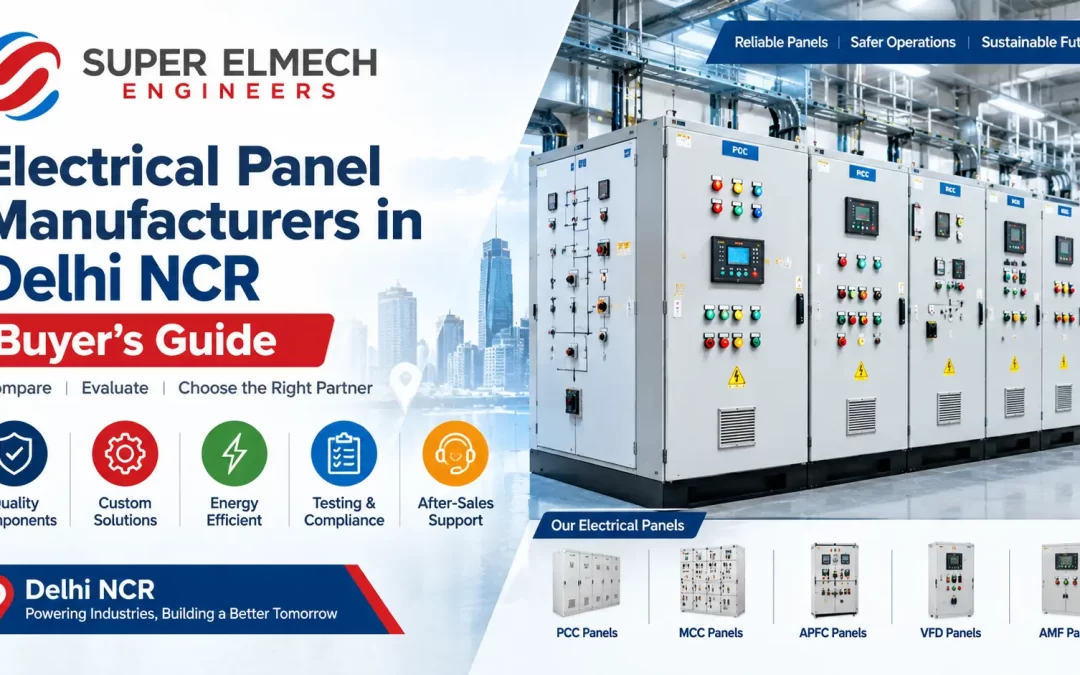
Electrical Panel Manufacturers in Delhi NCR: How to Shortlist the Right Supplier
Table of Contents
-
Why Choosing the Right Electrical Panel Manufacturer Matters
-
Types of Electrical Panels Used in Commercial and Industrial Projects
-
How to Shortlist Electrical Panel Manufacturers in Delhi NCR
-
Technical Specifications to Compare
-
Electrical Panel Safety, Quality and Testing
-
Custom Electrical Panels for Different Industries
-
Electrical Panel Price in Delhi NCR
-
Questions to Ask Before Placing an Order
-
Common Mistakes to Avoid
-
How to Evaluate Super Elmech Engineers
-
Frequently Asked Questions
-
Conclusion
Why Choosing the Right Electrical Panel Manufacturer Matters
Electrical panels are essential for distributing electrical power, controlling motors, managing power factor and supporting automation in commercial buildings and industrial facilities. The right panel must match the electrical load, operating environment, protection requirements and intended application.
When searching for electrical panel manufacturers in Delhi NCR, buyers may encounter suppliers offering different components, designs, testing arrangements and service packages. Two quotations can look similar while covering different technical specifications.
For example, a manufacturing plant with multiple motors may require motor control and variable-speed operation. A commercial building may need power distribution and coordination with backup-power systems. A factory with significant inductive loads may need an assessment of its power factor and harmonic conditions.
The selection process should therefore begin with the project’s requirements rather than the lowest advertised price.
A reliable procurement process considers:
-
Electrical ratings and connected loads
-
Panel design and component specifications
-
Protection and fault-level requirements
-
Enclosure and cooling arrangements
-
Inspection, testing and documentation
-
Installation and commissioning responsibilities
-
Warranty and after-sales support
-
Total cost over the expected service life
A structured shortlist helps buyers compare manufacturers fairly and identify a solution that fits the project.
Types of Electrical Panels Used in Commercial and Industrial Projects
Before contacting manufacturers, identify the panel category and its function. Different panels serve different purposes and should not be treated as interchangeable.
Power Control Centre Panels
Power Control Centre (PCC) panels are used for power distribution in suitable electrical installations. They may serve as a central distribution point for outgoing feeders supplying different sections of a facility.
When evaluating a PCC panel, review the incoming supply, rated current, outgoing feeders, busbar design, protective devices, short-circuit requirements and enclosure.
The final configuration should follow the electrical design and applicable project specifications.
Motor Control Centre Panels
Motor Control Centre (MCC) panels provide control and distribution for multiple motors. They are used in applications such as manufacturing plants, pumping systems, processing facilities and material-handling installations.
Important considerations include motor ratings, starting methods, overload protection, feeder arrangement, control logic and maintenance access.
Automatic Power Factor Control Panels
Automatic Power Factor Control (APFC) panels help improve power factor by switching capacitor banks according to measured electrical conditions.
The correct design depends on the facility’s load profile, existing power factor, capacitor requirements and harmonic conditions. A technical assessment is important before choosing an APFC panel.
Variable Frequency Drive Panels
Variable Frequency Drive (VFD) panels control the speed of compatible AC motors. They can be useful for suitable pump, fan, blower, conveyor and manufacturing applications.
Drive selection should account for motor current, load characteristics, speed range, cooling, control requirements and harmonics.
Explore Super Elmech’s Variable Frequency Drive panels.
Automatic Mains Failure Panels
Automatic Mains Failure (AMF) panels are used in suitable generator backup systems. Depending on the configuration, they monitor mains availability and coordinate generator operation and changeover functions.
Buyers should confirm generator compatibility, switching arrangements, interlocking, essential-load requirements and commissioning scope.
Distribution and Custom Control Panels
Distribution panels divide electrical power between outgoing circuits. Custom control panels may support machine operation, process automation, monitoring and other application-specific functions.
Before requesting quotations, explain the panel’s intended purpose and the functions it must perform.
How to Shortlist Electrical Panel Manufacturers in Delhi NCR
A practical shortlist should be based on documented requirements, relevant experience and a clear comparison of technical and commercial proposals.
Step 1: Prepare a Technical Requirement Sheet
Start by documenting the project’s essential requirements. This prevents different manufacturers from making different assumptions when preparing quotations.
Include:
-
Panel type and intended application
-
Incoming supply voltage and frequency
-
Rated current and load details
-
Number and type of outgoing feeders
-
Motor details, where applicable
-
Protection and control requirements
-
Installation environment and enclosure requirements
-
Automation and communication needs
-
Applicable project specifications
-
Required delivery and commissioning schedule
Where available, share the single-line diagram, load schedule, technical specification and equipment drawings.
Step 2: Check Relevant Manufacturing Experience
Ask manufacturers whether they have experience with applications similar to yours.
For example, a plant with several motors may need MCC or VFD panels, while a commercial building may require distribution panels and integration with backup power.
Request relevant project references, technical examples or product documentation where available. Evaluate the relevance of that experience rather than relying only on broad claims.
Step 3: Evaluate Engineering and Design Capability
A manufacturer should be able to explain how the proposed panel meets your requirements.
Depending on the project, ask about:
-
Single-line diagrams
-
General arrangement drawings
-
Control circuit drawings
-
Feeder schedules
-
Component selection
-
Busbar sizing
-
Protection coordination
-
PLC/HMI and communication requirements
Clarify which drawings are included, how approvals are handled and how design changes will be managed.
Step 4: Compare Component Specifications
Request a component schedule listing the major equipment and its ratings. Depending on the panel, this may include circuit breakers, contactors, relays, drives, meters, control devices and terminal blocks.
Compare exact model numbers, electrical ratings and technical specifications. Brand names alone do not prove that two proposed configurations are equivalent.
Ask the supplier to identify any alternatives or substitutions and obtain the necessary approval before production.
Step 5: Review Testing and Quality Procedures
Ask what checks will be completed before dispatch and which records will be provided.
Depending on the panel design and project requirements, inspections may include visual checks, wiring verification, protective-device checks, functional testing and applicable electrical tests.
If the client or consultant must witness testing, agree on the procedure and schedule in advance.
Step 6: Confirm Delivery and After-Sales Support
Confirm the expected manufacturing and delivery timeline, including the assumptions on which it is based.
Clarify whether the quotation includes installation, site testing, commissioning, operator guidance or service visits. Confirm the warranty terms and exclusions in writing.
A clearly defined service scope helps avoid disagreements after delivery.
Step 7: Compare Complete Quotations
Compare technical compliance first, then evaluate the commercial proposal.
Check the panel configuration, included components, documentation, testing, delivery terms, taxes, commissioning and warranty.
A lower-priced quotation may exclude important items. Ask suppliers to explain differences instead of assuming that the lowest price represents the best value.
Technical Specifications to Compare Before Buying
Technical specifications determine whether the proposed panel is suitable for the installation.
Electrical Ratings
Check the rated voltage, current, frequency and other relevant parameters against the project specification. The design must match the connected loads and expected operating conditions.
For motor-control panels, share motor nameplate details and clarify starting methods, duty cycle and overload requirements.
Short-Circuit Rating and Protection
The panel design must account for the prospective fault level and the protective devices required by the installation.
Ask the manufacturer to identify the relevant ratings and design assumptions. A panel should not be selected solely on its external size or nominal current rating.
Busbar Design
Busbar material, sizing, supports, connections and temperature-rise considerations should suit the specified operating conditions.
Ask for relevant design information and confirmation that the proposed panel matches the project requirements.
Enclosure and Cooling
Consider whether the panel will be installed indoors, outdoors or in a demanding industrial environment. Dust, moisture, ambient temperature and ventilation can influence enclosure selection and cooling.
Confirm the required ingress protection rating with the project engineer rather than choosing it based on appearance alone.
Automation and Monitoring
If the panel must integrate with a PLC, HMI or building management system, specify the required communication protocol, signals, alarms, interlocks and monitoring functions.
These requirements should be agreed before ordering so that the hardware and software scope are clear.
Maintenance Access
Check the space available for cable entry, inspection, operation, component replacement and future maintenance.
Clear labelling and suitable access arrangements can make maintenance easier and reduce avoidable disruption.
Electrical Panel Safety, Quality and Testing
Electrical safety should be part of the selection criteria from the beginning.
Applicable Standards and Project Requirements
Ask the manufacturer to identify the standards and project specifications relevant to the proposed panel. The applicable requirements depend on the equipment type, installation and intended use.
If the project requires particular certification, inspection or compliance records, confirm these requirements before placing the order.
Protection Coordination
Protective devices must be selected and coordinated according to the system’s fault levels, loads and design requirements. Have the relevant calculations and arrangements reviewed by a qualified electrical professional.
Factory Inspection and Testing
Agree on the inspection and testing scope before production begins. Establish which checks are included, which records will be supplied and whether the client or consultant needs to witness any tests.
Documentation and Handover
Request the documentation needed for installation, commissioning and maintenance. Depending on the project, this may include approved drawings, component lists, test records and operating instructions.
The purchase order should clearly state the required handover documents.
Custom Electrical Panels for Different Industries
Different industries have different operating conditions. A suitable manufacturer should evaluate the actual application and confirm what can be provided within the proposed design.
Manufacturing and Processing Plants
Manufacturing facilities may require power distribution, motor control, automation and integration with production machinery.
Panel selection should account for load characteristics, duty cycles, control requirements and the plant’s environmental conditions.
Textile and Steel Industries
Textile facilities may use winding machines, pumps, fans, blowers and conveyors. Steel facilities may use auxiliary pumps, material-handling equipment, ventilation systems and demanding process drives.
VFDs and other motor-control solutions may be suitable for particular applications, but heavy-duty drives require application-specific engineering.
Commercial Buildings and Residential Townships
Commercial projects may need power distribution and coordination with systems such as HVAC, pumps, lifts and generator backup.
The project team should identify essential loads, protection requirements and operational priorities before finalising the panel design.
Infrastructure and Water Treatment Projects
Water treatment and infrastructure facilities may require pump control, process monitoring, electrical distribution and automation interfaces.
Buyers should define the process signals, operating sequence, alarms and environmental conditions before selecting the panel.
Electrical Panel Price in Delhi NCR: What Affects the Cost?
Electrical panel prices vary significantly because the design and scope differ from project to project. A small distribution panel cannot be directly compared with a complex motor-control assembly.
Key cost factors include:
-
Panel type and electrical ratings
-
Number and ratings of incoming and outgoing feeders
-
Circuit breakers and other components
-
Busbar material and design
-
Enclosure size and protection requirements
-
VFDs, PLCs, HMIs and communication equipment
-
Cooling and ventilation arrangements
-
Testing and inspection requirements
-
Drawings and documentation
-
Installation and commissioning
-
Warranty and after-sales support
How to Get a More Accurate Quotation
Send the same technical specification and drawings to every shortlisted manufacturer. Ask each supplier to provide a clear list of included components, exclusions, delivery assumptions, testing and service responsibilities.
If the proposed designs differ, request a technical explanation before comparing prices.
This process helps procurement teams compare like-for-like quotations and reduces the risk of unexpected costs after the order is placed.
Questions to Ask Before Placing an Order
Use this checklist when evaluating potential suppliers:
-
Have you supplied panels for applications similar to this project?
-
What exact components and electrical ratings are included?
-
Will you provide the required design and control drawings?
-
What inspections and tests are included before dispatch?
-
Are client or consultant witness tests required?
-
What is the expected delivery schedule?
-
Is installation or commissioning included?
-
What warranty conditions and service arrangements apply?
-
How will component substitutions be approved?
-
What information or site preparation must the buyer provide?
Record the answers and attach the approved technical scope to the purchase order.
Common Mistakes to Avoid When Shortlisting Manufacturers
Choosing Only on Initial Price
A lower quotation may have a different component specification or exclude testing, documentation or commissioning. Compare the complete scope before deciding.
Sharing Incomplete Technical Requirements
Missing motor data, load schedules or control requirements can lead to inaccurate quotations. Provide as much verified technical information as possible.
Ignoring the Installation Environment
Incorrect enclosure or cooling selection may affect equipment performance. Explain the actual installation conditions to the manufacturer.
Overlooking Testing and Documentation
Missing test records and drawings can complicate installation, commissioning and future maintenance. Define the handover requirements before production.
Assuming Every Panel Is Interchangeable
PCC, MCC, APFC, AMF and VFD panels serve different functions. Confirm that the proposed configuration is suitable for the intended application.
Leaving Commissioning Responsibilities Unclear
Confirm who will handle installation checks, parameter settings, site testing and final handover. Do not assume these services are included unless stated in writing.
How to Evaluate Super Elmech Engineers
Super Elmech Engineers Pvt. Ltd. presents electrical control and distribution panel solutions and related engineering services on its website. Buyers can review its published information and contact the company to discuss their project requirements.
Useful pages include:
Before requesting a quotation, prepare your panel type, load details, electrical ratings, required control functions, installation conditions and expected delivery date.
Ask the company to confirm the specific configuration it can provide, the applicable technical specifications, the testing arrangements and the support included in the proposal.
Discuss your project requirements: Visit Super Elmech’s contact page to enquire about the available panel solutions.
Frequently Asked Questions
How do I shortlist electrical panel manufacturers in Delhi NCR?
Prepare a technical specification, assess relevant manufacturing experience, compare component ratings, review testing and documentation, and confirm commissioning and warranty terms. Evaluate technical suitability before comparing prices.
Which electrical panel manufacturer is suitable for an industrial project?
Choose a manufacturer whose engineering capability, proposed design, component selection, testing arrangements and support match your project’s requirements. Request relevant technical documents and written confirmation of the supplied scope.
What types of electrical panels are commonly used in industries?
Common types include PCC, MCC, APFC, VFD, AMF, distribution and custom control panels. The correct selection depends on the installation’s power distribution, motor-control and automation needs.
What should I check before buying an electrical control panel?
Review electrical ratings, protection, busbar design, enclosure, cooling, control features, component specifications, testing, drawings, warranty and service responsibilities.
What affects electrical panel prices in Delhi NCR?
Panel type, electrical rating, components, enclosure, automation hardware, testing, commissioning and after-sales support all affect the final price. A detailed specification helps suppliers prepare comparable quotations.
Can electrical panels be customised for factories?
Customisation may be possible depending on the manufacturer’s capabilities and project requirements. Share the load details, control philosophy, site conditions and required interfaces for technical evaluation.
Why are factory testing and documentation important?
Testing helps verify the agreed checks before dispatch, while documentation supports installation, commissioning, troubleshooting and maintenance. Define the required tests and records according to the panel design and project specification.
What information should I provide for an electrical panel quotation?
Provide the panel type, electrical ratings, load or motor details, feeder schedule, protection requirements, control functions, installation conditions, applicable specifications and delivery expectations.
Does a lower-priced electrical panel always offer better value?
No. A lower price may reflect a different scope, component selection or service package. Compare technical compliance, included components, testing, documentation and total ownership costs before deciding.
How can I contact Super Elmech Engineers?
Visit Super Elmech’s official contact page to discuss your project requirements and confirm the available solutions and services.
Conclusion
Shortlisting electrical panel manufacturers in Delhi NCR requires a structured review of technical capability, component specifications, electrical safety, testing, documentation and after-sales support.
Start by defining your project’s electrical requirements and identifying the correct panel category. Provide complete technical details, compare written quotations on the same scope and confirm testing, delivery, commissioning and warranty responsibilities before placing the order.
The best choice is not necessarily the manufacturer offering the lowest initial price. It is the supplier whose proposed solution meets the project’s requirements and provides a clear, documented scope.
To discuss your requirements with Super Elmech Engineers Pvt. Ltd., visit https://superelmech.com/contact-us/.